
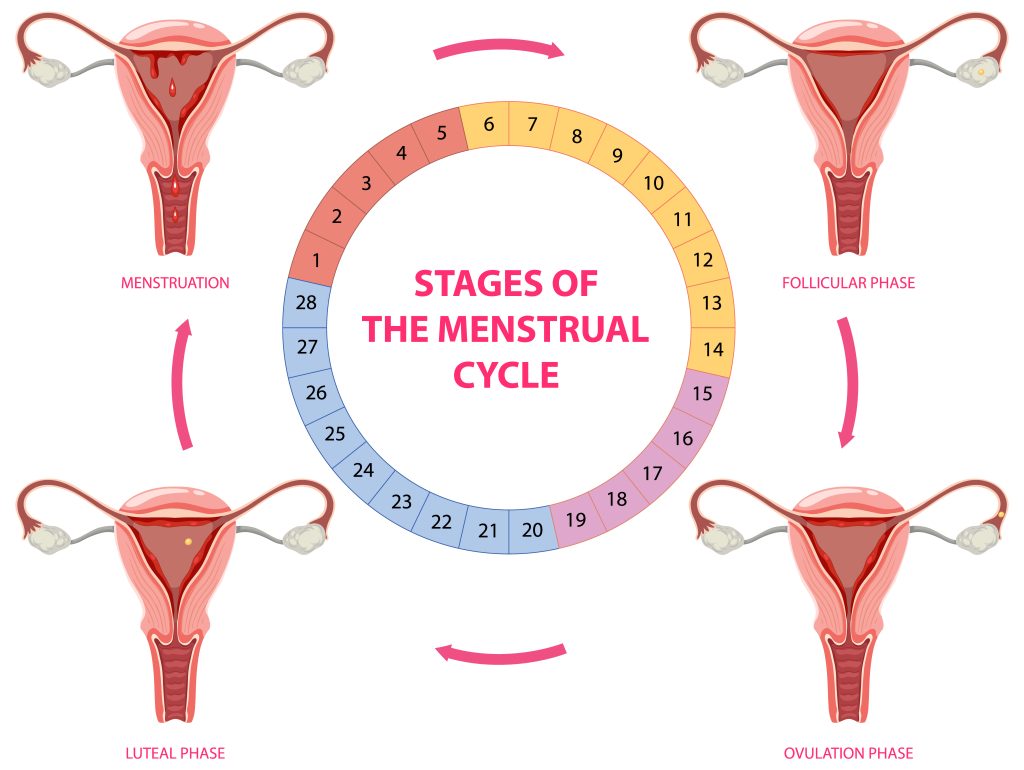

Have you ever wondered what’s really going on inside your body each month? For many of us, the menstrual cycle is just “that time” we experience cravings, mood swings, and cramps. But understanding each stage of the menstrual cycle can be a game-changer, especially if you’re thinking about optimizing your fertility. So, grab your favorite snack (yes, even if it’s chocolate!) and let’s get to know what’s happening in each part of your cycle, one day at a time.
Phase 1: Menstruation – The Big Clean-Up
Days 1–5 (approximately)
Ah, menstruation. Also known as “the period.” This is when your body sheds the uterine lining it built up in the previous cycle. During these days, estrogen and progesterone hormones drop to low levels, triggering the shedding of the lining. While your body’s flushing things out, it’s also hitting the reset button, gearing up to start the process all over again.
Did You Know? The average person loses about 2 to 3 tablespoons of blood during a period—though it may feel like much more! Keeping a menstrual journal can help you spot any irregularities early, which is especially helpful if you’re planning to conceive.
Phase 2: The Follicular Phase – The Egg Race Begins
Days 6–14
After your period, the follicular phase begins. Think of this phase as “prep time” for your body. During these days, your brain sends out a little hormone messenger called follicle-stimulating hormone (FSH) to encourage your ovaries to get some eggs ready for release. Several follicles (tiny sacs holding immature eggs) start to grow, but only one will make it to the final round.
As your follicles grow, they produce estrogen, a hormone that thickens your uterine lining. It’s like fluffing up the pillows in a guest room, making everything cozy for a potential new tenant (aka a fertilized egg).
Pro-Tip: Midway through this phase, your estrogen levels rise, which can give you a natural glow, extra energy, and increased confidence—ideal for socializing, dating, or simply embracing life!
Phase 3: Ovulation – Showtime!
Around Day 14 (but this can vary)
Ovulation is the star of the show. This is the moment when your body releases a mature egg into the fallopian tube, where it’s ready and waiting to meet some sperm. Ovulation usually happens around day 14 of a 28-day cycle, but it can vary from person to person.
How Can You Tell? Some signs of ovulation include a slight rise in body temperature, changes in cervical mucus (which may look like egg whites), and even a boost in libido. Tracking these can help you zero in on your fertile window—the best time for conception.
Fun Fact: Did you know that an egg only lives for about 12 to 24 hours after it’s released? That’s a tight window! But sperm can hang out for 3 to 5 days, which is why it’s helpful to track ovulation if you’re trying to conceive.
Phase 4: The Luteal Phase – Waiting Room Status
Days 15–28
Now, the luteal phase kicks in. After releasing the egg, the follicle transforms into something called the corpus luteum, which pumps out progesterone to keep the uterine lining stable and ready to support a potential pregnancy.
If the egg meets sperm and is fertilized, it will start its journey toward the uterus for implantation. If not, the corpus luteum gradually breaks down, progesterone levels drop, and your body prepares to shed the lining. And thus, the cycle begins again.
Why This Matters: Understanding the luteal phase is crucial because if progesterone levels are too low, it can lead to issues like irregular cycles or difficulty conceiving. Symptoms like mood swings, bloating, and cravings during this phase? Blame it on progesterone!
Your Cycle, Your Superpower
The menstrual cycle isn’t just a monthly inconvenience. It’s a beautifully complex process designed to prepare your body for a potential pregnancy. By tuning in to each phase, you can better understand your body, work with its natural rhythm, and make choices that align with your fertility goals.
Call to Action: Start Tracking Your Cycle Today!
Knowledge is power. Whether you’re planning for a family or just want to be more in sync with your body, consider tracking your menstrual cycle. Apps, journals, or even a basic calendar can help you map out your cycle’s phases, spot any irregularities, and feel more empowered on your journey to reproductive wellness.
Picture credits: Pixabay, freepik


