


Trying to conceive can feel like an exciting new chapter—until it’s not. For many women, the road to pregnancy isn’t as quick or straightforward as society led us to believe. In fact, one in every six couples worldwide experiences fertility challenges, with women’s reproductive health playing a significant role in many cases.
But here’s the catch: most women don’t even realize something might be wrong until they are ready to have a baby.
This article is your cheat sheet. We’re diving deep into three of the most common female fertility challenges, what they really mean, how they affect your chances of conceiving, and what can be done to manage them.
Let’s get real, let’s get informed—and let’s take control of our reproductive life.
- Polycystic Ovary Syndrome (PCOS): The Hormonal Disruptor
What is it?
PCOS is one of the leading causes of female infertility, affecting 1 in 10 women of reproductive age globally. It’s a hormonal disorder where the ovaries produce excessive androgens (male hormones), which interfere with the development and release of eggs.
How It Affects Fertility
PCOS messes with ovulation. Without regular ovulation, there are fewer chances for an egg to meet sperm. The hormonal imbalance also leads to irregular periods, making it harder to track your fertile window.
Symptoms to Watch For
- Irregular or absent periods
- Excess facial or body hair
- Acne or oily skin
- Weight gain, especially around the abdomen
- Difficulty getting pregnant
Treatment and Management
The good news? PCOS is manageable.
- Lifestyle changes like weight loss, balanced diet, and exercise can restore ovulation in many women.
- Medications like Clomid or Letrozole can stimulate ovulation.
- Metformin helps regulate insulin and hormonal levels.
- IVF is an option if other treatments fail.
PCOS isn’t a fertility death sentence—it’s a detour. And many women with PCOS go on to conceive with the right support. Without delay, see a gynaecologist for consultation and assistance if you have PCOS.
- Endometriosis: The Silent Intruder
What is it?
Endometriosis affects about 10% of women globally. It occurs when tissue similar to the lining of the uterus grows outside the uterus—on ovaries, fallopian tubes, or pelvic lining—causing inflammation and scarring.
How It Affects Fertility
The extra tissue can block the fallopian tubes or interfere with the release of eggs, fertilization, or implantation. It can also create a hostile environment for sperm and eggs to thrive.
Symptoms to Watch For
- Painful periods (cramps that interfere with daily life)
- Pain during intercourse
- Chronic pelvic pain
- Heavy menstrual bleeding
- Infertility or difficulty conceiving
Note: Some women with endometriosis have NO symptoms. That’s why it’s often called a “silent” condition.
Treatment and Management
- Pain management with NSAIDs or hormonal therapy
- Laparoscopic surgery to remove endometrial lesions and improve fertility
- Fertility treatments like IUI or IVF may be recommended depending on the severity
Early diagnosis is key, so don’t normalize pain that keeps you in bed every month. Speak up, get checked.
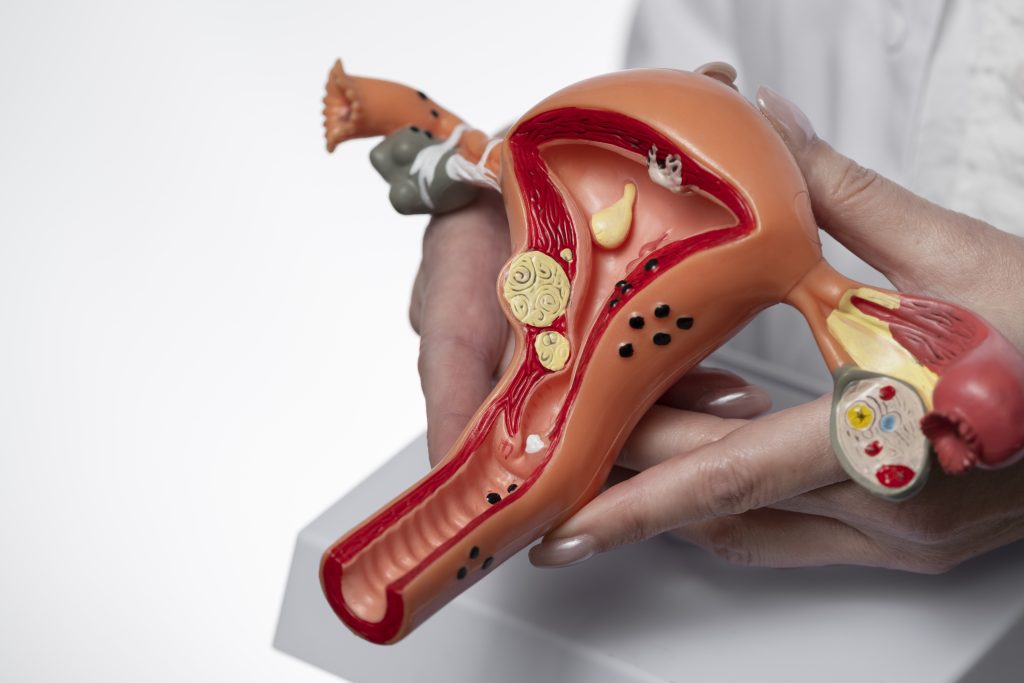
- Uterine Fibroids: The Womb Invaders
What is it?
Fibroids are non-cancerous growths that develop in or around the uterus. They’re super common—up to 70% of women will develop fibroids by age 50, especially women of African descent.
How They Affect Fertility
Not all fibroids impact fertility, but those that distort the uterine cavity can:
- Interfere with implantation
- Block fallopian tubes
- Increase risk of miscarriage
- Disrupt the blood flow to a developing embryo
Symptoms to Watch For
- Heavy menstrual bleeding
- Pelvic pressure or pain
- Frequent urination
- Painful sex
- Miscarriages or difficulty conceiving
Treatment and Management
- Medication to manage bleeding or shrink fibroids
- Minimally invasive surgery like myomectomy to remove fibroids while preserving fertility
- Uterine artery embolization (UAE) for women not seeking future pregnancies
- Fertility treatments if fibroids have affected reproductive anatomy
Don’t wait until your fibroids grow roots and start collecting rent—early detection is your best defense.
Final Thoughts: Knowledge is Power, Action is Key
Fertility is complex, and so are the conditions that can affect it. But here’s the truth: you don’t have to wait until you’re “trying” to start caring about your reproductive health.
Whether you’re actively TTC (trying to conceive), considering freezing your eggs, or just want to know what’s up with your body—this is your sign to pay attention.
Don’t ignore irregular periods. Don’t normalize pain. Don’t brush off symptoms.
Instead:
- Know your body
- Track your cycle
- Ask questions
- Seek help early
Because when it comes to fertility, early action can change your story.
Share this article with your sisters, cousins, and girlfriends. You could be saving someone from years of confusion, heartbreak, or delay. Let’s break the silence and make fertility education viral.


